Best Rytr Alternatives 2026: 7 Tools Worth Switching To
Rytr is cheap for a reason — it runs on an older AI model, and long-form output shows it fast. These seven Rytr alternatives 2026 cover where Rytr falls short, from serious blog writing to multilingual marketing copy, at every budget level, with real testing behind each recommendation rather than just a features comparison pulled from marketing pages.
How We Tested
We used each tool to draft the same set of content briefs — a 1,200-word blog section, five product descriptions, and a short email sequence — then compared output quality, editing time required, and pricing against Rytr’s Unlimited plan at $9/month.
Quick Comparison Table
| Tool | Best For | Starting Price | Free Plan | Our Score |
|---|---|---|---|---|
| ChatGPT | All-round versatility and long-form writing | $20/month (Plus) | Yes, limited | 9/10 |
| HyperWrite | Writing across browser tabs and apps | $19.99/month | Yes, 15 gen/mo | 8/10 |
| Claude | Long-form writing and careful editing | $20/month (Pro) | Yes, limited | 9/10 |
| Copy.ai | Team GTM copy and workflows | $29/month (5 seats) | No | 6/10 |
| NeuronWriter | SEO-scored content writing | $23/month | No, 7-day trial | 8/10 |
| Frase | SEO content briefs and research | $49/month | No, 7-day trial | 7/10 |
| Sudowrite | Fiction and creative long-form writing | $19/month | No, 3-day trial | 8/10 |
1. ChatGPT — Best Overall Rytr Alternative
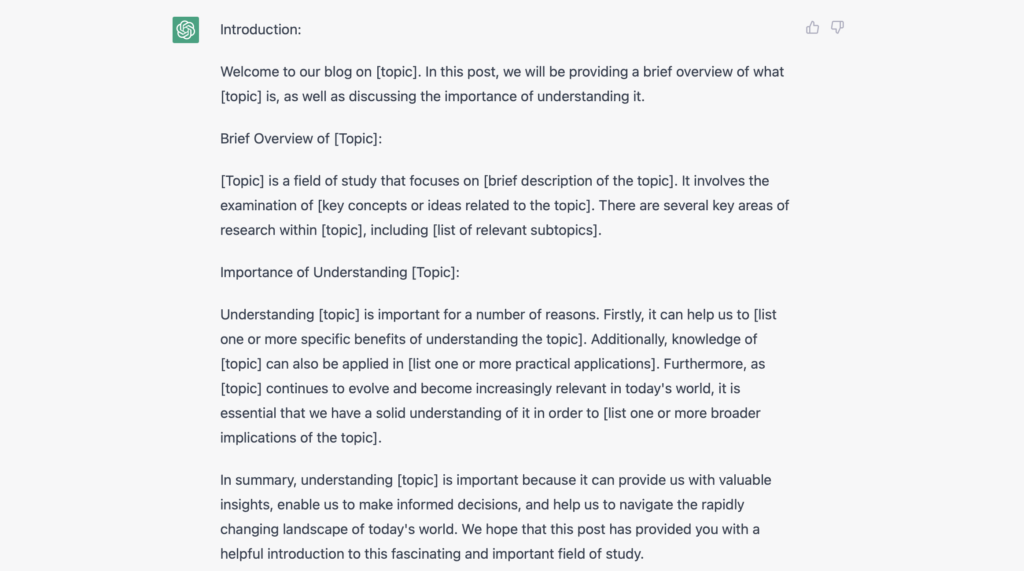
Our Score 9/10 | Best For General writing, research, and long-form content | Starting Price $20/month | Free Plan Yes — GPT-5.4 with usage limits | Pros ✓ Handles long-form content Rytr can’t ✓ No character caps to manage ✓ Genuinely versatile beyond writing | Cons ✗ No built-in plagiarism checker ✗ No pre-built marketing templates
ChatGPT is the obvious step up from Rytr for anyone who’s hit the wall on long-form content. Where Rytr’s templates produce short, structured snippets, ChatGPT holds context across a full 1,500-word draft without the repetition Rytr shows past a few paragraphs. It’s also simply more capable across everything else — research, outlining, editing your own writing, brainstorming — rather than being scoped narrowly to short-form marketing copy.
The tradeoff is that ChatGPT doesn’t hand you Rytr’s 40+ ready-made templates. You’re writing prompts, not filling in template fields, which has a slightly steeper learning curve for someone who’s never used a chat-based AI tool before. Current pricing: Free tier with usage limits, Go at $8/month, Plus at $20/month with higher limits and access to GPT-5.4, Pro at $200/month for power users. Full plan details are on OpenAI’s official pricing page.
For anyone specifically coming from Rytr’s template library, the adjustment period is real but short — most people we’ve seen make the switch land on a small set of go-to prompts within the first week that effectively replace their most-used Rytr templates, just with more flexibility to adjust tone and length on the fly rather than being locked into a fixed template structure.
2. HyperWrite — Best for Writing Across Multiple Apps
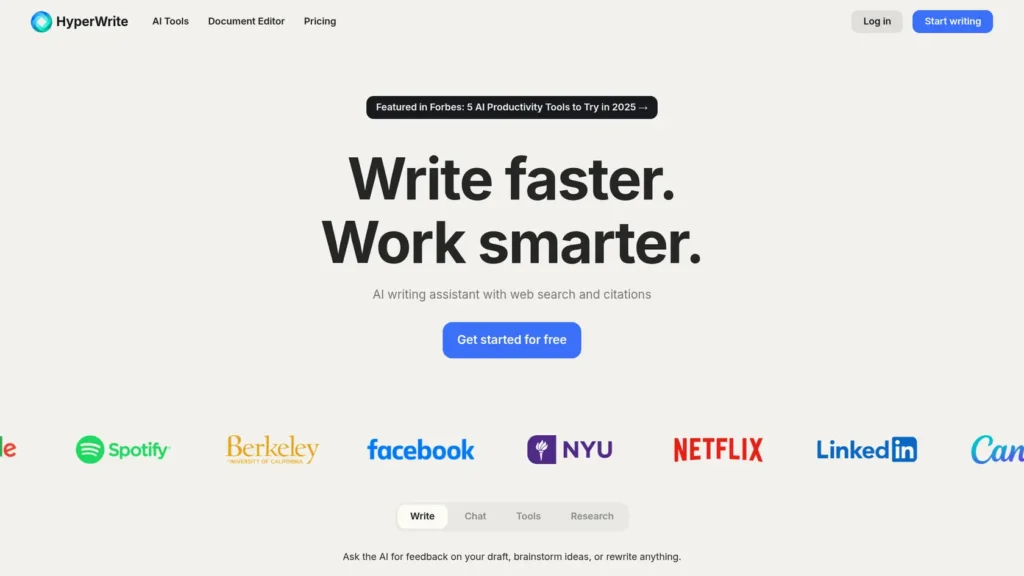
Our Score 8/10 | Best For Writers who work across Gmail, Docs, and LinkedIn | Starting Price $19.99/month | Free Plan Yes — 15 generations/month | Pros ✓ Follows you into any browser text field ✓ Learns your writing style over time ✓ Cheaper than Jasper for similar assistance | Cons ✗ English only ✗ No team or brand voice features
Rytr’s Chrome extension generates content on demand; HyperWrite’s TypeAhead predicts full sentences as you type, live, anywhere in the browser. If your workflow is scattered across email, docs, and social platforms rather than centered in one editor, HyperWrite closes that gap in a way Rytr’s on-demand generation doesn’t. See our full HyperWrite review for a deeper breakdown. Pricing: Free (15 gen/month), Premium $19.99/month ($16/month annual), Ultra $44.99/month ($29/month annual).
Where this alternative diverges most from Rytr is in how it fits your day rather than what it costs — the two tools are actually close in price at the entry tier, but the actual usage pattern is completely different. Rytr expects you to open its editor, pick a template, and generate; HyperWrite expects you to keep typing normally and accept suggestions inline. Writers who find template-switching disruptive tend to prefer HyperWrite; writers who like a structured starting point tend to prefer Rytr’s approach.
3. Claude — Best for Careful, Long-Form Writing
Our Score 9/10 | Best For Nuanced long-form writing and editing | Starting Price $20/month | Free Plan Yes — limited daily messages | Pros ✓ Strong at maintaining tone and nuance across long pieces ✓ Excellent for editing existing drafts ✓ Large context window for working with source material | Cons ✗ No templates for quick marketing snippets ✗ Not built for high-volume short-form output
Claude is the pick for anyone whose complaint about Rytr is “the writing sounds robotic and repetitive past a few sentences.” Claude’s strength is precisely where Rytr weakens — sustained, coherent long-form writing that doesn’t lose the thread. It’s less useful if what you actually need is Rytr’s core job: fast, templated short-form copy at volume. Pricing: Free tier with limits, Pro $20/month, Max plans from $100/month for heavier use.
In direct testing against Rytr on the same 1,200-word blog section brief, the difference showed up most clearly by paragraph four — Rytr’s output started repeating phrasing and circling back to points already made, while Claude’s draft maintained a consistent argument and voice through to the conclusion without needing a restructure. The editing time saved on the Claude draft was substantial enough that, for anyone regularly producing content over 500 words, the $20/month starts to look like a rounding error next to the hours saved re-writing Rytr’s repetitive sections.
4. Copy.ai — Best for Team Marketing Workflows
Our Score 6/10 | Best For Small teams running repeatable GTM content workflows | Starting Price $29/month (5 seats) | Free Plan No — sunset in 2026 | Pros ✓ Built-in workflow automation ✓ Brand voice training ✓ Multi-model access in one chat | Cons ✗ No solo/freelancer tier — Chat plan is the only self-serve option under $1,000/month ✗ Positioned for teams, not individuals
Copy.ai has moved decisively toward team GTM (go-to-market) workflows rather than solo content writing — its free plan is gone, and the entry Chat plan at $29/month covers 5 seats, not scoped to one person the way Rytr is. If you’re a small team standardizing marketing copy across a shared workspace, Copy.ai’s workflow automation is a genuine step up from Rytr. If you’re a solo freelancer, this isn’t really built for you anymore — see our full Copy.ai pricing breakdown before committing.
This is the one alternative on this list where the honest recommendation for most people reading a “Rytr alternatives” article is actually “skip it.” Copy.ai’s 2025 repositioning away from solo/freelancer writing means the pricing and feature set now assume a team workflow that most people switching off Rytr’s $9/month plan simply don’t have. It earns its place on this list for completeness and for the minority of readers managing a small marketing team, not as a like-for-like Rytr replacement.
Want a free cheat sheet ranking all 7 Rytr alternatives by price and best use case? Get it free →
5. NeuronWriter — Best for SEO-Scored Writing
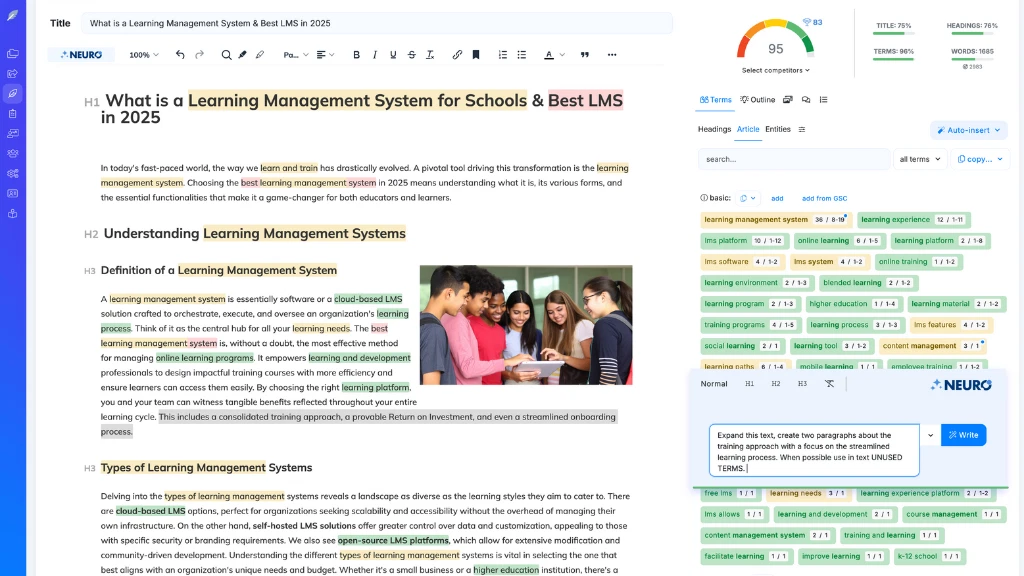
Our Score 8/10 | Best For Writers who need SEO-optimized content, not just generated text | Starting Price $23/month | Free Plan No — 7-day free trial | Pros ✓ NLP/SERP scoring built into the editor ✓ Tracks AI Overview and AI Mode visibility ✓ Cheaper than Surfer or Clearscope | Cons ✗ AI writing quality is a step behind dedicated writing tools ✗ No permanent free tier
Rytr doesn’t score your content against what’s actually ranking for a keyword — it just generates text. NeuronWriter does both: content generation plus a live NLP score comparing your draft against the top-ranking pages for your target term. If your Rytr use case is blog content meant to rank in Google, not just quick marketing copy, NeuronWriter is a genuinely different category of tool. Read our full NeuronWriter review for the complete breakdown.
The distinction worth understanding before switching: Rytr and NeuronWriter aren’t really solving the same problem, even though both generate AI text. Rytr is optimized for speed and volume of short-form output. NeuronWriter is optimized for a single piece of content actually ranking in search — it will not out-produce Rytr on volume, but for anyone whose content needs to perform in organic search rather than just exist, the NLP scoring closes a gap Rytr was never built to address.
6. Frase — Best for SEO Content Briefs and Research
Our Score 7/10 | Best For SEO content teams building briefs before writing | Starting Price $49/month | Free Plan No — 7-day free trial | Pros ✓ Strong competitor research and brief-building ✓ AI-visibility tracking included at every tier ✓ Full platform unlocked even on the entry plan | Cons ✗ Pricier entry point than Rytr or NeuronWriter ✗ Less useful if you just need fast short-form copy
Frase is built around the research-then-write workflow: it pulls competitor content, builds a brief, and then helps you write against it. That’s a fundamentally different job than Rytr’s fill-in-the-template approach, and it shows in the price — $49/month starting, over 5x Rytr’s Unlimited tier. Worth it specifically if briefing and research are the bottleneck in your content process, not the writing itself.
For teams that currently use Rytr to draft content and then separately research what a piece should cover, Frase collapses those two steps into one workflow — which can be a genuine time saver even at the higher price point, if the research step was previously eating significant hours per article.
7. Sudowrite — Best for Fiction and Creative Writing
Our Score 8/10 | Best For Novelists and creative long-form writers | Starting Price $19/month | Free Plan No — 3-day trial | Pros ✓ Purpose-built for fiction, not marketing copy ✓ Strong at maintaining character voice and plot continuity ✓ Brainstorming and “describe” tools built for creative work | Cons ✗ Not useful for business or marketing content ✗ Narrower use case than Rytr
Rytr’s templates are built for marketing and business content — product descriptions, ads, emails. If what you actually need is help with a novel, short story, or other creative long-form project, Rytr’s short-form structure will fight you the whole way. Sudowrite is purpose-built for exactly that gap, with tools for maintaining character voice and plot continuity that Rytr simply doesn’t attempt.
This is a narrower recommendation than the other six tools on this list, but an important one: if you landed on Rytr hoping to draft fiction and found its templates awkward for anything beyond a product blurb, that’s not a Rytr limitation you’ll fix by learning the tool better — it’s simply built for a different job. Sudowrite exists specifically for the use case Rytr wasn’t designed to cover.
What Actually Changes When You Switch
Beyond the feature comparisons above, it’s worth being direct about what switching away from Rytr actually costs in practice, since price comparisons alone can undersell the real friction involved. Rytr’s biggest practical advantage isn’t quality — it’s that its 40+ templates mean you rarely have to think about how to phrase a request. You pick “Product Description,” fill in three fields, and get output. Every alternative on this list except Copy.ai trades that structure for a blank prompt box, which means the first week or two after switching involves genuinely re-learning how to ask for what you want.
For content that’s genuinely short-form and repetitive — the same five or six content types over and over — that structure loss is a real cost, and it’s the strongest argument for staying on Rytr rather than switching purely for quality reasons. For content where every piece is different enough that templates were never a great fit anyway, the switch to a prompt-based tool tends to feel liberating within days rather than restrictive.
The other practical consideration is output volume. Rytr’s Unlimited plan is genuinely unlimited in character count for $9/month — none of the alternatives on this list match that combination of price and volume. ChatGPT Plus, Claude Pro, and HyperWrite Premium all cap usage in some form (message limits, generation limits) even though none of those caps are likely to matter for typical individual use. If your Rytr use case involves genuinely high-volume output — hundreds of short pieces a month — it’s worth explicitly checking each alternative’s usage limits against your actual volume before assuming the switch is a clean upgrade.
How to Choose
The table below assumes you already know what’s driving the switch. If you don’t yet, the fastest way to decide is to look back at your last month of Rytr use and ask which specific limitation actually cost you time: content that needed more depth than a template could give, a workflow scattered across too many apps, content that needed to rank in search rather than just exist, or simply needing more people to have access at once.
Each alternative on this list solves exactly one of those problems well rather than solving all of them at once — which is also why running Rytr alongside one specialist tool, rather than replacing it outright, is often the more practical move than a full switch.
| Your Situation | Recommended Tool |
|---|---|
| You need long-form blog content, not just short snippets | ChatGPT or Claude |
| Your writing happens across email, docs, and social apps | HyperWrite |
| You need content that’s scored against what’s actually ranking | NeuronWriter |
| You’re a small team standardizing marketing copy | Copy.ai |
| Research and briefing is your bottleneck, not writing | Frase |
| You’re writing fiction, not marketing copy | Sudowrite |
| Budget is still the top priority and short-form is genuinely enough | Stay on Rytr — it remains the cheapest genuinely usable option at $9/month |
Want the honest Rytr alternatives verdict as a free one-page reference? All 7 tools ranked by price, use case, and who each is really for. Get it free →
FAQs
What is the closest free alternative to Rytr? ChatGPT’s free tier covers general-purpose writing with no character caps or monthly resets, making it a stronger free option than Rytr’s own 10,000-character free plan for most use cases.
Is there a better AI writing tool than Rytr for the same price? At Rytr’s $9/month Unlimited tier, there isn’t a direct like-for-like competitor at that exact price — the alternatives on this list that beat Rytr on quality (ChatGPT, Claude, HyperWrite) all start around $19-20/month.
Why switch from Rytr if it’s cheaper than everything else? Price isn’t the issue — output quality on anything past short-form is. Rytr runs on an older AI model and its long-form writing becomes repetitive quickly. If your content needs are genuinely short-form (social captions, product descriptions, ad copy), Rytr remains a reasonable budget pick.
Which Rytr alternative is best for a content agency? Frase or NeuronWriter, depending on whether research/briefing (Frase) or SEO scoring during writing (NeuronWriter) is the bigger bottleneck for your team.
Does any Rytr alternative match its 30+ language support? Rytr’s Premium plan supports 35+ languages. Copy.ai and ChatGPT both offer strong multilingual support; HyperWrite is English only, which matters if multilingual output is a hard requirement.
How long does it actually take to switch from Rytr to a prompt-based tool? Most people we’ve observed making this switch reach a comfortable, faster-than-Rytr workflow within one to two weeks. The initial slowdown comes from not having Rytr’s templates as a starting structure; it resolves once you’ve built a small personal library of go-to prompts for your most common content types.
Is it worth running Rytr alongside a more powerful tool rather than fully switching? For some workflows, yes. A number of freelancers use Rytr for genuinely high-volume, simple short-form tasks (product descriptions, social captions) where its templates are fast and adequate, while reaching for ChatGPT or Claude specifically for anything long-form or client-facing where quality matters more than speed. At $9/month, keeping Rytr running alongside a primary tool costs less than most single alternatives on this list.
Rytr Alternatives 2026: Final Verdict
Rytr’s $9/month Unlimited plan remains genuinely hard to beat on price for short-form marketing copy — social captions, product descriptions, quick ad variations. But the moment your content needs stretch past a few paragraphs, its GPT-3-era output quality shows. For long-form writing, ChatGPT or Claude are the clear upgrades. For writers whose work happens across a dozen browser tabs rather than one editor, HyperWrite closes that gap Rytr never addressed. And if what you actually need is content that’s optimized to rank, not just generated, NeuronWriter does a job Rytr was never built for. The right alternative depends entirely on which of Rytr’s limits is actually costing you time — pick based on that, not on price alone.
Related Articles
Pricing verified July 2026.